Erin Wilichowski

Your life has only 3 planning scenarios

Mark Ziety

By Mark Ziety, CFP®, AIF®, Senior Advisor, WisMed Financial

You’ll either have a long life, health problems along the way or a short life. That’s it.

Plan for those three situations whether you’re single, married, with or without kids and most of your planning is done. Let’s look at how to plan for each.

First, essential tasks for everyone

  • Manage monthly cash flow. Call it a budget, spending plan, living below your means or whatever makes it appealing to you. It doesn’t matter if you have high income or low income, everyone needs to control their inflow and outflow.
  • Life happens, have an emergency fund.
  • Pay off all high interest consumer debt.
  • Give of your time, resources and be thankful. Live happy.

Plan for a long life

  • Are you saving at least 15% for retirement with the right investments? Boosting it to 20-25% is even better.
  • Have you maximized your tax advantaged retirement accounts through your employer and on your own?
  • Will your tax burden be higher or lower in the future? Hint – if you have a lot of tax deferred investments, you could be igniting a tax bomb that hits later in life.
  • Save for kids’ education expenses.
  • Determine the monthly income you’ll have in retirement from all sources.
  • Dream about your future.

Plan for health problems

  • Health insurance is the obvious answer.
  • Auto and umbrella insurance can provide for you via uninsured/underinsured coverage.
  • Disability insurance that replaces two-thirds of your income if you can’t perform your own occupation is critical, especially during your early and mid-career. A policy with an inflation adjustment is even better.
  • Everyone over age 18 should have health care and financial power of attorney documents.
  • Do you have a source to pay for long-term care expenses? If not, consider an insurance policy.

 Plan for a short life

  • If anyone depends on you for income, get term life insurance. It’s cheap, so don’t skimp.
  • Are your beneficiary designations correct?
  • Do you need a will or trust?
  • Ensure your family knows where to find your documents and accounts.
  • Tell your family you love them. And if you’re faithful, pray.

Since we don’t know the future, all three plans are important for everyone. Our Physician’s Financial Guide has even more tips. Or, for one-on-one help schedule an appointment.

To your best life and healthy finances.

Mark Ziety, CFP®, AIF® 608.442.3750.
WisMed Financial, Inc. part of the Wisconsin Medical Society

Is your group disability insurance good enough?

Tom Strangstalien

By Tom Strangstalien, Insurance Advisor

May is Disability Insurance Awareness Month. This is the perfect time to evaluate your disability protection, determining if you’re adequately covered and address any potential holes or gaps in your coverage. A common theme I hear when talking with our members is, “I have disability insurance coverage as part of my employee benefits, so do I really need personal disability protection?” For physicians and medical professionals, the answer is almost always yes!

Typical limitations of group coverage

First, there is a cap on the amount of benefits that will be paid out for a claim. If the maximum benefit amount is $10,000 per month and as a physician you’re earning $300,000 per year, you’re not even covering half of your income. Are you willing to roll the dice for a potentially devasting and dramatic lifestyle change?

Second, group disability coverage contains “offset provisions.” This means that if you are drawing payments from other sources upon incurring a disability, the benefits paid by the group policy will be reduced pro-rata. These sources could include things like social security, liability settlements, workers compensation payments, employer provided retirement plan replacement benefits and other accident or short-term disability plans. A properly designed personal disability plan will not contain such provisions.

Next, group disability plans are not portable. In other words, if you change your place of employment or go into practice on your own or as an independent contractor, you will lose the disability protection. If you have incurred some health issues, coverage then can be very expensive or not available to you at all. This is why it’s so important to get a personal disability plan in place as early in life as possible.

Benefits of personal disability insurance

With a personal disability insurance plan, there are many optional benefits available to you. It’s not a one size fits all plan like a group plan tends to be. You can elect additional coverages such as:

  • student loan payment coverage
  • inflation protection
  • catastrophic coverage
  • partial and residual disability coverage levels
  • future increase benefits (you can increase the amount of benefits as your income increases with no additional medical underwriting)

What I want you to take away from this article during Disability Awareness Month is this: take a few minutes and review your current disability protection. If you do not yet have a personal disability plan, get one as soon as possible. Don’t roll the dice with your biggest asset – your ability to earn a substantial income! As the independent insurance agency of the Wisconsin Medical Society, we can shop all of the major insurers, review your current group plan and design a plan that will fully protect you and your family for your lifetime.

As your financial partner, your WisMed Assure team is here to take care of your personal financial security so that you can take the best possible care of yourself, your family and your patients.

For additional information regarding disability insurance, contact WisMed Assure at insurance@wismedassure.org, complete this online form or call 608.442.3810.

Cyber Liability Trends Continue in 2022

Jim Davis

By Jim Davis, WisMed Assure Vice President Medical Professional

As companies shifted to more virtual work, cybercriminals took advantage of every slight vulnerability. So, let’s review some cyber security basics, specifically focusing on why health care professionals and organizations are the most vulnerable to cyberattacks, what their greatest vulnerabilities are and what risk mitigation you must have in place to even qualify for insurance these days.

Most Common Cyberattacks

Cyberattacks impact businesses of all sizes, from global corporations to small startups. Though smaller businesses may think they are too small to be targeted, it’s quite the opposite. Cybercriminals specifically target smaller health care facilities knowing that they are unlikely to have implemented adequate endpoint security. Most successful cyberattacks occur because of human error. It only takes one exposed file or answered phishing email to cause a massive data breach. These are the most common cyberattacks:

  • Ransomware – This malware denies the victim access to their data unless they pay a ransom to the attackers.
  • Phishing – This attack consists of fraudulent emails sent inconspicuously with malicious files attached intended to gain access to the victim’s device.
  • Password Attack – By accessing a victim’s password, cybercriminals can gain entry to critical data and computer systems.
  • Denial of Service (DoS) Attack – In this attack, cybercriminals flood systems and networks with traffic to overload its bandwidth so the owners are not able to operate their system. 
  • Internet of Things (IoT) Attack – Hackers can gain entry through any end point and then access other devices in the network. 

Most Targeted Industries

Cyber perils are currently the most significant concern for all industries, but some business sectors are hit harder than others. According to Forbes, this is the rate that cyberattacks have increased from 2020 to 2021.

  • Health care – 71%
  • Insurance/Legal – 68%
  • Internet Service Providers – 67%
  • Financial/Banking – 53%
  • Government – 47%

Top Five Underwriting Requirements

The basic requirements that need to be in place for an insurance carrier to underwrite cyber liability insurance for medium to large health care facilities is unchanged for 2022, and are as follows:

  • MFA/Multifactor Authentication – a security process that requires two or more validation factors to verify a user’s identity, such as a six-digit code via a mobile phone in addition to a username and password.
  • Cloud based back-ups.
  • Ability to bring systems back up within 10 days.
  • Ongoing phishing training.
  • Endpoint Detection & Response System (EDR) – an endpoint is any device that is physically an end point on the network, such as laptops, tablets and mobile phones. These end points can be entry points for a cyber breach. EDRs continuously monitor and identify threats to contain and remove them. EDRs should also be cloud based.

For additional information regarding cyber liability insurance, contact Jim Davis at jim.davis@wismedassure.org or call 608.442.3728.

Your 2022 Tax Strategy

Mark Ziety

By Mark Ziety, CFP®, AIF®, Senior Advisor, WisMed Financial

Tax laws feel like stepping into quicksand lately, don’t they? Trying to understand if, when and how the tax laws will change can make you feel like the floor will fall out from under you at any moment. (Particularly at tax time.)

This is especially true if you’re a high earner or have accumulated a significant nest egg. With each tax change, it feels like your tax-saving strategy is in jeopardy. However, we are in familiar waters because the tax laws have evolved constantly. In the past 20 years alone, the wealthiest taxpayers’ top marginal tax rate has shifted between 35% and 39.6%.

It sounds all doom and gloom, but it’s possible to find tax-saving opportunities hiding inside your current strategy and every new tax law update.

With your 2021 tax return in hand, it’s time to start planning your 2022 tax strategy by checking some important lines on your 1040 or 1040-SR. Things to consider:

  • Lines 2b and 3b show dividends and interest that are adding to your current tax bill. Should you hold these investments in a tax deferred account?
  • Was line 4b exactly $6,000 or $12,000? If so, your backdoor Roth IRA contribution(s) was probably not reported correctly.
  • Did you have realized capital gains that may have added to your tax? Check line 7 to find out. If your capital gain tax rate is low, consider whether you should realize additional capital gains in 2022 or defer them to a future year.
  • Did your deductions help you? If line 12a is $12,550, $14,250, $18,800, $25,100, or $27,800 you did not get a deduction. Consider bunching multiple years of deductions into a single tax year so you can itemize deductions.

US Senators still intend to pass portions of last year’s failed Build Back Better Act in 2022, so the timing of property tax payments, additional tax deferral, and Roth conversions are all strategies that should be considered this year.

Want help with your tax strategy? Download WisMed Financial’s free tax planning guide  or schedule an appoinment.

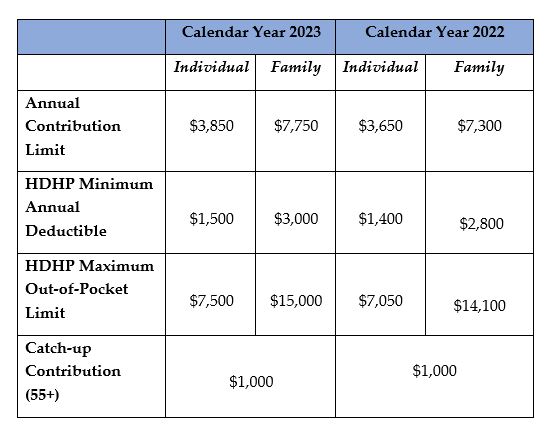
P.S. Download the 2022 tax brackets, retirement contribution limits, investment checklist, and quick decision flow charts from the new WisMed Mobile app.

To your best life and healthy finances.

Mark Ziety, CFP®, AIF® 608.442.3750.
WisMed Financial, Inc. part of the Wisconsin Medical Society

Lower Health Insurance Costs with Strategy and Unique Offerings

By Chris Noffke, GBDS, CSFS, Vice President of Employee Benefits

Chris Noffke

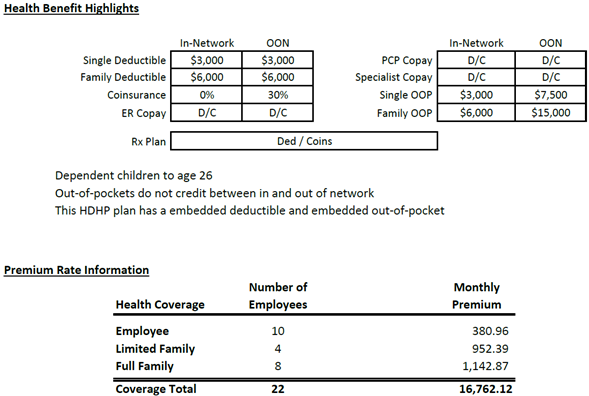
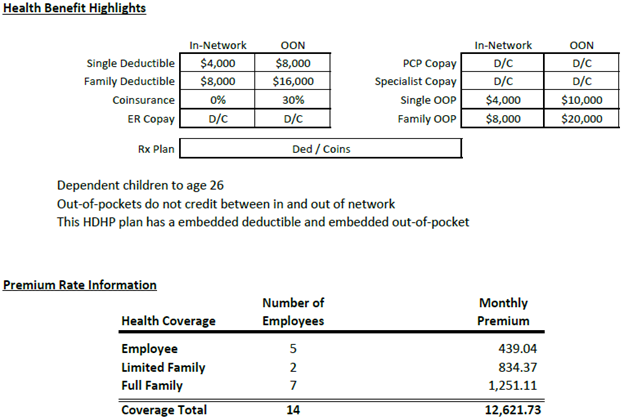
In 1946 the Wisconsin Medical Society established WPS to help physicians and residents pay for the costs of health care. Seventy years later I had the chance to help create another opportunity for health care professionals, the Wisconsin Medical Society Welfare Benefit Trust (WMSWBT) or the Association Health Plan (AHP). This year I was able to negotiate with our carrier partner, WPS, to lower our rates for all new groups. This has shown significant cost reductions for groups by decreasing their premium rates (up to 40% for some areas).

One Milwaukee-area group enrolled with the rates seen here:

An example of rates for the Marathon County area:

If you haven’t spoken with us about all the services, strategies and benefits available to you through the Wisconsin Medical Society’s insurance agency, reach out today. Even if your current health plan is in the middle of its cycle, we can still find savings for you and your employees (employees can even get deductible credits for health care dollars spent).

Let me give you a no obligation quote today – we can give you a preliminary rate within 2 days of receiving your census. You’ll see that we offer great rates, unique services and are the only agency that exclusively serves the health care community. Let’s schedule a time to talk.

Happy Spring!

Why Residents Need Disability Protection

Tom Strangstalien

By Tom Strangstalien, Insurance Advisor

As a resident or fellow, your biggest asset is quickly becoming your ability to earn an income. Until you become independently wealthy and can sustain a loss of earning power without consequence, it is imperative to have disability protection. But why do this as a resident or fellow, before the dramatic income increase of becoming an attending physician? Can you wait, get on my employer benefits group plan if applicable, and purchase supplemental personal disability insurance when I can better afford it? There are several reasons why this may not be the best choice as you build your overall financial plan.

While a medical resident or fellow, you are entitled to a base amount of coverage without being required to provide proof of financial qualification. Additionally, WisMed Assure works with several insurers that provide discounts to many of the residency programs. Furthermore, Wisconsin Medical Society Members are eligible for even more discounts. Throughout your career, these savings can add up to a monumental amount of money.

Disability insurance protection increases in cost as we age – it will be more expensive every year. By getting a policy early in your career, you’re locking in the price while it’s the most affordable. Another consideration is to purchase a future increase option at this time, where you can increase your protection as your future income increases, without the imposition of any more medical underwriting.

Group disability insurance coverage is a wonderful benefit, and I almost always advise to enroll for the maximum group benefits that you are eligible for, however it often has limitations. It may be capped at an amount that is insufficient to replace your total income if disabled. Portability is also a concern – if you change employers or career paths, the coverage will be lost. Almost always, group coverage contains offsets where any benefits attained from other sources will decrease the benefits paid out by group coverage. A solid personal disability policy, specially designed for physicians and those in the medical field, addresses these inherent risks.

So where should you obtain this vitally important coverage at the most affordable price? Only purchase personal disability insurance coverage through an independent agent who can offer plans from multiple companies. Never allow yourself to be sold a policy by a representative who offers only one plan, and thereby has an innate conflict of interest. The plan should be designed for you, not just a standard policy.

WisMed Assure exists for your benefit and offers plans from the Big 5 insurance companies, with plans specifically designed for physicians. Reach out to us and let us design a plan that fits your needs. James Dahle, MD, of The White Coat Investor states, “Early in residency, buy as large of a high-quality, specialty-specific, own occupation, individual disability insurance policy as an agent is willing to sell you.” Take care of this urgent financial chore today.

For additional information regarding disability insurance, contact WisMed Assure at insurance@wismedassure.org, complete this online form or call 608.442.3810.